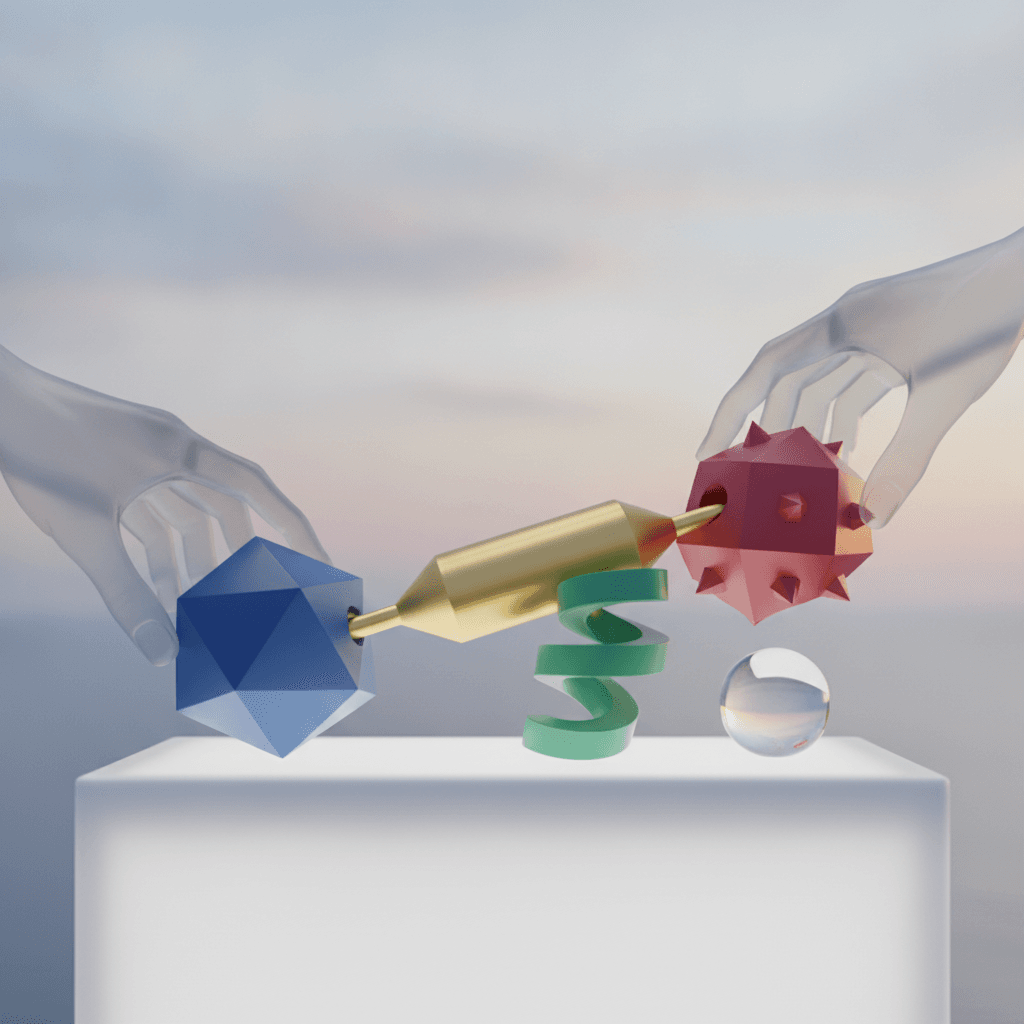
The landscape of design is constantly evolving, demanding more from practitioners than ever before. No longer is it enough to simply excel in one niche; modern product development thrives on interconnectedness. Designers are increasingly called upon to bridge gaps, understand diverse perspectives, and contribute beyond the confines of their primary craft.
This is where the concept of the "T-shaped designer" emerges as a powerful paradigm. It's a model that champions both profound expertise in one area and a broad understanding across various related disciplines. Embracing this approach not only makes you a more versatile and valuable asset to any team, but it also equips you with the adaptability needed for enduring impact throughout your career.
What Exactly is a T-Shaped Designer?
Imagine the letter "T." The vertical bar represents your deep, specialized expertise – the area where you possess significant mastery and can contribute at an advanced level. This might be user research, visual UI design, interaction design, content strategy, or front-end prototyping. It's your anchor, your primary value proposition.
The horizontal bar, conversely, signifies your breadth of knowledge across other relevant domains. This isn't about being an expert in everything, but rather having a foundational understanding of adjacent fields like product management, engineering, marketing, business strategy, or even other design disciplines. This broad awareness allows you to communicate effectively, empathize with colleagues, and see the bigger picture.
Why the T-Shape Matters in Modern Design
Today's product development is inherently cross-functional. Teams are composed of diverse specialists – engineers, product managers, marketers, data analysts – all working towards a common goal. An "I-shaped" specialist, while deeply skilled, might struggle to understand the constraints or perspectives of others, leading to communication breakdowns and siloed work.
A T-shaped designer, however, can act as a natural connector. Their broad understanding enables them to ask better questions, anticipate challenges from different angles, and contribute to solutions that consider the entire product lifecycle. This adaptability fosters stronger collaboration, accelerates decision-making, and ultimately leads to more cohesive and impactful user experiences.
Cultivating Your Vertical: Deepening Your Expertise
Before you can effectively broaden, identify your core strength. What design discipline truly ignites your passion and where do you naturally excel? This is the foundation of your vertical. Dedicate time to mastering this craft, staying current with best practices, and pushing the boundaries of your knowledge.
To deepen your vertical, seek out projects that challenge you within your specialty. Pursue advanced certifications, engage in specialized workshops, or find a mentor who can guide you to the next level. For instance, if your vertical is interaction design, immerse yourself in complex system design, animation principles, or accessibility standards. This continuous growth ensures your deep expertise remains relevant and cutting-edge.
Expanding Your Horizontal: Broadening Your Horizons
Once your vertical is solid, begin to intentionally expand your horizontal. This involves actively seeking knowledge and experience in areas that complement your core skill. Think about the disciplines your work interacts with most frequently. Understanding their goals, processes, and challenges will make you a more effective collaborator and problem-solver.
- Shadow Colleagues: Spend a few hours observing a product manager define requirements, an engineer debugging code, or a researcher conducting interviews.
- Cross-Functional Meetings: Attend meetings beyond your immediate team, such as product strategy sessions or engineering stand-ups, even if you don't have a direct deliverable.
- Self-Directed Learning: Explore online courses, articles, or books on topics like business fundamentals, basic coding concepts, marketing principles, or data analytics.
- Volunteer for Diverse Tasks: Offer to help with tasks slightly outside your usual scope, such as contributing to a design system's technical documentation or assisting with usability testing recruitment.
- Engage in Discourse: Actively participate in discussions with colleagues from different functions, asking clarifying questions to understand their perspectives.
The Benefits for Your Career and Impact
Becoming T-shaped offers significant advantages. You become more adaptable to changing project needs and market demands, increasing your job security and career resilience. Your ability to speak multiple "languages" within a product team elevates your influence and makes you a more trusted advisor. You're not just a pixel-pusher or a research-reporter; you're a strategic partner.
This holistic perspective also positions you for leadership roles. Leaders often need to understand the interplay of various functions to guide product vision and execution. A T-shaped designer naturally develops this perspective, enabling them to make more informed decisions and lead teams more effectively, ultimately driving more enduring and meaningful impact for users and the business.
Practical Steps to Embrace the T-Shape
Start with self-reflection: What is your strongest skill, and what areas are you curious about? Identify one or two adjacent fields to explore. Don't try to learn everything at once. Focus on gaining a foundational understanding rather than immediate mastery.
Actively seek out opportunities for growth. This could mean volunteering for a project that requires a new skill, asking to be included in meetings you wouldn't normally attend, or simply dedicating an hour a week to learning about a new topic. Frame it as continuous learning, not a checklist to complete. The journey to becoming a T-shaped designer is ongoing, an iterative process of deepening and broadening your capabilities.
Sources & Further Reading
- T-Shaped Skills — Interaction Design Foundation
- T-shaped skills — Wikipedia
- Design Thinking — Interaction Design Foundation