Design systems are vital for consistency and efficiency in product development, but they constantly evolve. New components emerge, existing ones are refined, and fundamental shifts are sometimes necessary. Effectively managing these updates, without disrupting consuming teams, is a critical challenge. How do we clearly communicate changes and their impact?
Semantic Versioning (SemVer) offers a powerful solution. This software development standard uses MAJOR.MINOR.PATCH to declare change nature. Adopting SemVer for design system components ensures predictable updates, reduces breaking changes, and fosters trust across design, development, and product teams. This simple numbering scheme brings profound benefits.
What is Semantic Versioning (SemVer)?
SemVer is a three-part numbering system: MAJOR.MINOR.PATCH (e.g., 1.2.3). Each number conveys specific information about a release's changes. This standard helps consumers understand an update's scope and potential impact, moving beyond arbitrary version numbers to a system that 'means' something specific and actionable.
Applying SemVer means every component update communicates its nature through the version number. This transparency is crucial for teams relying on your design system, allowing them to anticipate and plan for updates without guesswork.
The Core Principles: MAJOR, MINOR, PATCH
Understanding what each number signifies is fundamental to leveraging SemVer. Each increment has a distinct meaning and direct implications for consuming teams.
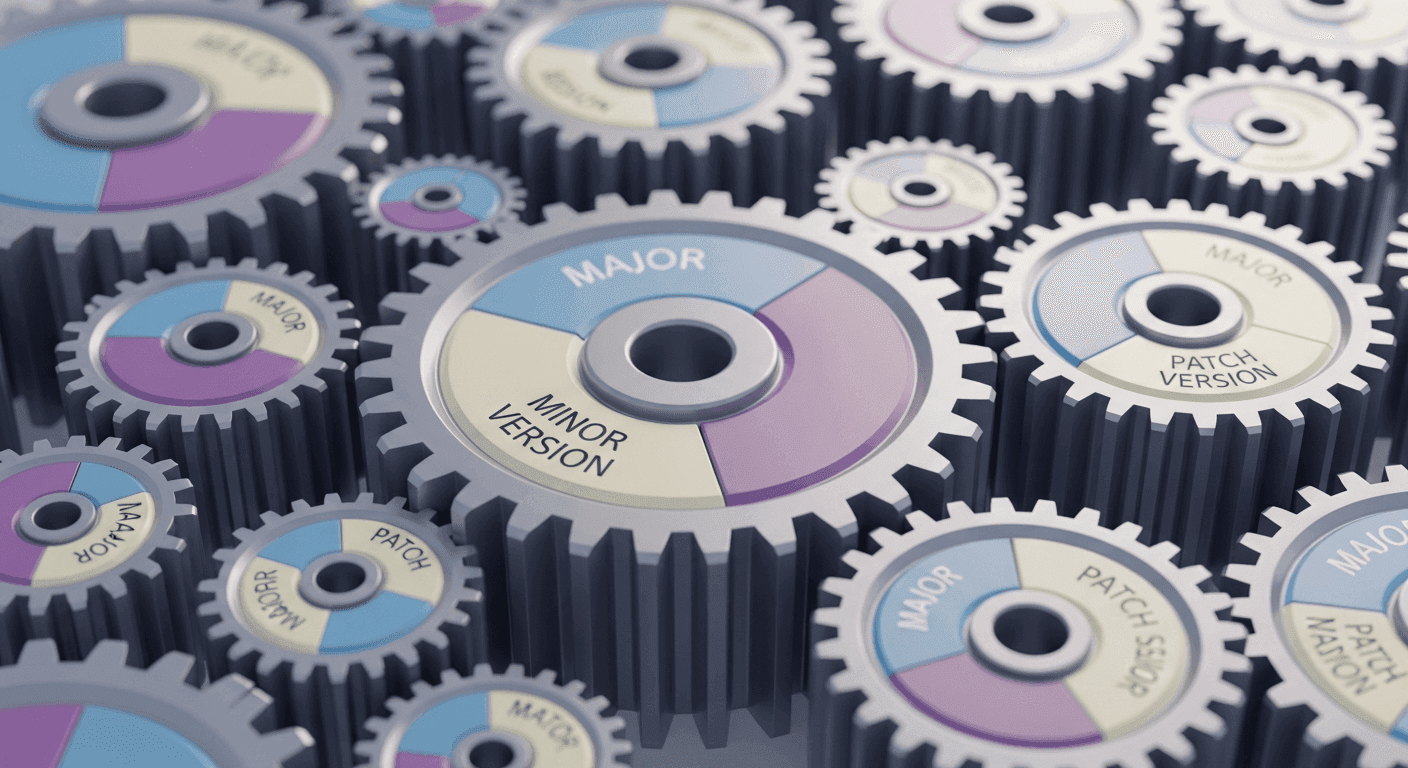
- MAJOR (X.y.z): Breaking changes requiring consuming teams to update code/designs. Examples: complete visual overhaul, removing a component prop, fundamental behavior shift.
- MINOR (x.Y.z): Backward-compatible new features. New capabilities that don't break existing implementations. Examples: adding a new variant (e.g., 'small' button), introducing an optional new prop, non-disruptive visual enhancements.
- PATCH (x.y.Z): Backward-compatible bug fixes. Small, isolated changes correcting errors without altering functionality. Examples: fixing a visual glitch, resolving an accessibility issue, optimizing performance.
This system's clarity is invaluable: a PATCH update typically allows confident adoption. A MINOR update offers new possibilities without immediate breakage. A MAJOR update signals a need for careful review and likely adaptation.
Why SemVer Matters for Design System Components
For designers and product managers, SemVer is a strategic tool. It transforms component updates from a dreaded task into a predictable, manageable process. When consuming teams know what to expect, they can plan work, allocate resources, and avoid unexpected disruptions. This predictability builds trust.
Developers are more likely to adopt and regularly update dependencies if confident that MINOR/PATCH updates won't break applications. This reduces friction, encourages consistent usage, and accelerates product development. It also helps product teams understand design changes' impact on timelines, fostering better cross-functional alignment.
Implementing SemVer in Your Design System Workflow
Integrating SemVer requires discipline, but benefits justify effort. Establish clear guidelines for classifying MAJOR, MINOR, or PATCH changes. This might involve a review process where design and development leads collaborate to classify upcoming changes and their impact.
For instance, changing a 'Button's default background color might be a PATCH (bug fix) or MINOR (aesthetic refresh). Adding an 'icon-only' variant is MINOR. Removing the 'primary' prop entirely, requiring a new 'intent' prop, is a breaking change, warranting a MAJOR version. SemVer must reflect in documentation and release notes with clear changelogs.
Common Pitfalls and Best Practices
While SemVer is straightforward, implementation can be challenging. Misclassifying changes is a common pitfall; labeling a breaking change as MINOR causes frustration. Over-incrementing MAJOR versions for minor tweaks creates upgrade fatigue. Best practices include maintaining a clear, accessible versioning policy understood by everyone.
Regular communication about upcoming changes is vital. Consider a 'breaking changes' section in documentation with clear migration paths. Automated tooling can help enforce SemVer rules and generate release notes, reducing human error and ensuring consistency.
Beyond the Numbers: The Human Element
Ultimately, Semantic Versioning is more than a numbering convention; it's a commitment to clear communication, predictability, and shared understanding within your product ecosystem. It fosters responsibility for change impact and empowers teams to collaborate harmoniously. Embracing SemVer makes design systems truly robust, reliable, and collaborative foundations.
Sources & Further Reading
- Semantic Versioning — Wikipedia
- Design Systems 101 — Nielsen Norman Group
- Web Components — MDN Web Docs
- Dependency hell — Wikipedia
- Design Systems for Collaboration and Consistency — Interaction Design Foundation