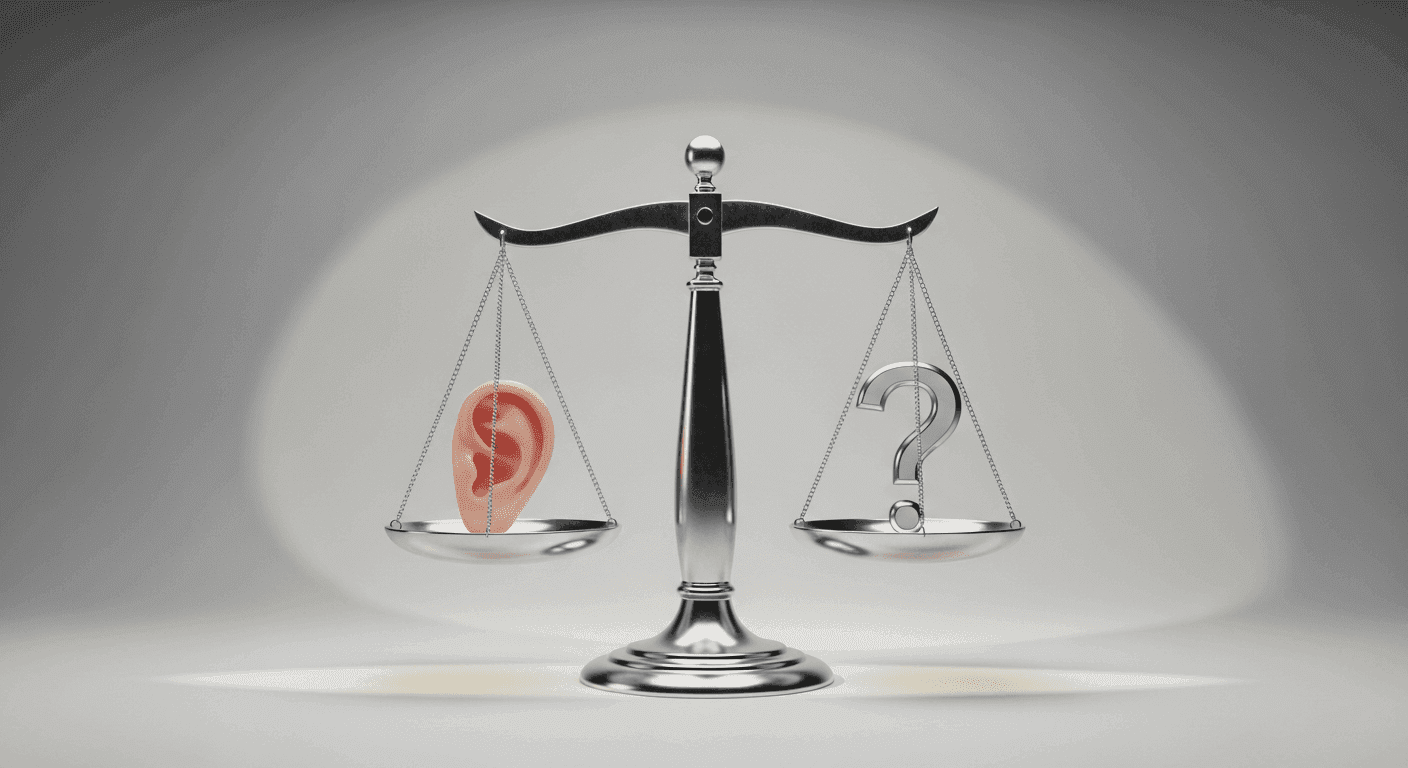
Usability testing stands as a cornerstone of user experience research, offering direct insights into how real people interact with products. It’s where we observe users in their natural (or simulated) environment, identifying pain points, validating design decisions, and uncovering unexpected behaviors. While the participant's actions and feedback are central, the role of the moderator is equally critical, and often, a subtle source of potential bias.
The ultimate goal of any usability test is to gather authentic user behavior and feedback, unclouded by the researcher's expectations or influence. Achieving this requires deliberate effort to minimize bias, starting with the person guiding the session: the moderator. By understanding and applying specific techniques for unbiased moderation, designers and product professionals can ensure their research yields truly accurate and actionable insights, leading to more user-centric products.
Understanding Moderator Bias
Before diving into techniques, it's crucial to acknowledge what moderator bias is and how it manifests. Moderator bias refers to the unconscious ways a researcher’s expectations, body language, tone of voice, or leading questions can subtly influence a participant’s responses or actions. This isn't usually intentional; it's a natural human tendency. Participants, in turn, may exhibit social desirability bias, where they try to give answers they believe the moderator wants to hear, or confirmation bias, where they confirm a perceived hypothesis from the moderator.
Awareness is the first step. For instance, a slight nod of approval when a participant navigates a feature 'correctly' or an unconscious frown when they struggle can communicate your expectations. Such non-verbal cues, along with poorly phrased questions, can inadvertently steer a participant away from their genuine thoughts and towards what they perceive as the 'right' answer.
Crafting Neutral and Open-Ended Questions
The way you phrase questions is paramount to unbiased moderation. Leading questions, which subtly suggest a desired answer or reveal the moderator's assumption, must be avoided at all costs. Instead, focus on open-ended questions that encourage participants to elaborate freely, in their own words, without prompting a specific direction.
Consider the difference between asking, 'Wasn't that confusing?' versus 'Can you describe your experience with that particular step?' The former implies a problem, potentially influencing the participant to agree, while the latter invites an honest, descriptive account. Neutral questions empower participants to share their true perspectives, even if those insights challenge your initial hypotheses.
- Instead of 'Don't you agree that this feature is intuitive?' ask 'What are your thoughts on this feature's ease of use?'
- Avoid 'Did you like the new design?' in favor of 'How do you feel about the visual elements of this design?'
- Replace 'Was it hard to find?' with 'Can you describe your process for locating that item?'
- When a participant struggles, say 'What are you thinking right now?' instead of 'Are you stuck?'
- Prompt for explanation: 'Tell me more about why you chose that path,' rather than 'So you preferred that option?'
The Art of Active, Non-Judgmental Listening
Active listening is about more than just hearing words; it's about fully understanding the participant's message, both verbal and non-verbal, without imposing your own interpretations or judgments. This involves paying close attention to their tone, body language, and even pauses. The goal is to create a safe, empathetic space where participants feel comfortable sharing their authentic thoughts and frustrations.
Techniques like reflective listening – paraphrasing what the participant has said to confirm understanding ('So, if I understand correctly, you found it difficult to…?') – can be powerful. Minimal encouragers ('uh-huh,' 'I see') show you're engaged without interjecting. Crucially, embrace silence. Often, participants need a moment to process their thoughts. Resisting the urge to fill every pause allows them to elaborate further and reveal deeper insights.
Maintaining a Consistent Protocol
A well-structured moderator guide or script is an invaluable tool for ensuring unbiased moderation. This document outlines the introduction, tasks, specific questions, and wrap-up for each session. By adhering to a consistent protocol, you ensure that every participant receives the same instructions and is asked the same core questions in the same sequence. This standardization significantly reduces the variability introduced by the moderator across different sessions.
While some flexibility is always necessary to follow emergent themes or delve deeper into interesting behaviors, the core structure should remain consistent. Deviating significantly from the guide for certain participants but not others can introduce inconsistencies that make it difficult to compare findings objectively and draw reliable conclusions.
Observing, Not Intervening
One of the most challenging aspects of unbiased moderation is allowing participants to struggle. Your primary role is to observe, not to teach or assist. The 'think aloud' protocol, where participants verbalize their thoughts and feelings as they interact with the product, is a cornerstone of usability testing. Your job is to prompt this verbalization ('What are you thinking right now?') rather than guiding them through tasks.
It can be tempting to jump in and offer help when a participant is clearly confused or stuck. However, these moments of struggle often reveal the most critical usability issues. Intervening too quickly or explaining how something works masks genuine problems. If a participant asks for help, deflect with neutral questions like, 'What would you typically do in this situation?' or 'What are you looking for?' This encourages them to find their own way, providing invaluable insight into their natural problem-solving process.
Debriefing and Self-Reflection
Unbiased moderation is an ongoing skill that improves with practice and self-awareness. After each testing session, take time to debrief and reflect on your performance. Ask yourself: Were there moments where I might have led the participant? Did I inadvertently show approval or disapproval? Did I interrupt too often? Reviewing session recordings, focusing specifically on your own verbal and non-verbal cues, can be incredibly illuminating.
Consider inviting a colleague to observe your sessions or even co-moderate. An external observer can provide objective feedback on your moderation style, identifying potential biases or habits you might overlook. Continuous self-assessment and feedback are crucial for honing your skills and ensuring that your usability testing efforts consistently yield the most accurate and unbiased insights possible.
Sources & Further Reading
- How to Conduct Usability Testing — Interaction Design Foundation
- The Moderator's Role in Usability Testing — Interaction Design Foundation
- Observer-expectancy effect — Wikipedia
- Social-desirability bias — Wikipedia