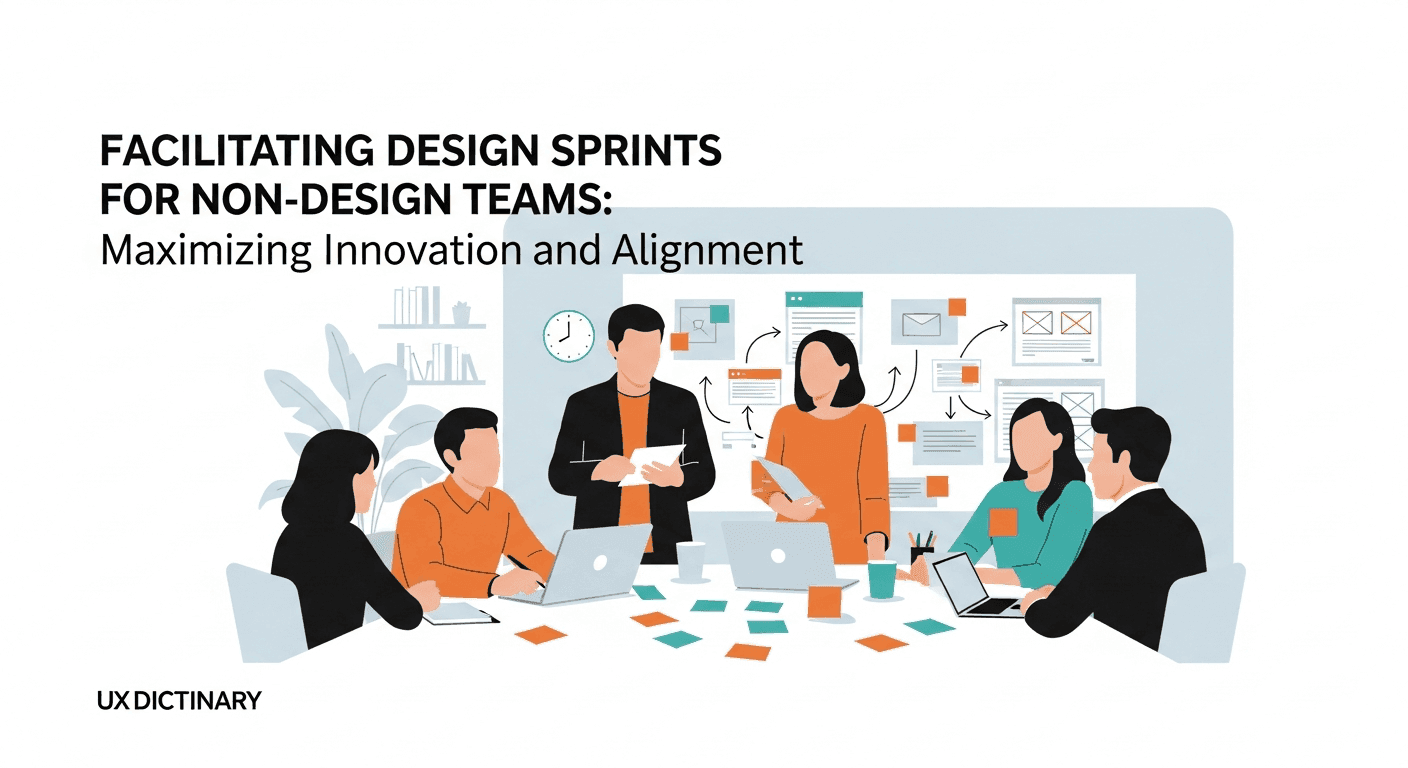
Design sprints have emerged as a powerful methodology for rapidly solving complex problems and testing new ideas. They condense months of work into days, fostering intense focus and collaboration. However, the term 'design' often conjures images of sticky notes, wireframes, and prototypes, leading many to believe that sprints are exclusively for design teams. This perception, while understandable, overlooks a massive opportunity: involving non-design teams. When engineers, marketers, sales professionals, legal experts, or operations specialists participate, the sprint gains invaluable perspectives, breaking down silos and enriching the problem-solving process in ways a purely design-centric group simply cannot.
The true magic of a design sprint isn't just in the speed of iteration, but in the alignment it creates across an organization. For designers and product leaders, facilitating a sprint with non-designers can feel daunting. There are concerns about jargon barriers, creative inhibitions, or simply 'wasting their time.' Yet, by strategically preparing, adapting activities, and employing specific facilitation techniques, you can transform these challenges into strengths, empowering diverse teams to contribute meaningfully and drive solutions that are not only user-centered but also technically feasible, business viable, and organizationally adopted. This article will guide you through maximizing innovation and alignment by effectively facilitating design sprints for your entire cross-functional team.
Why Involve Non-Design Teams in Design Sprints?
The primary benefit of integrating non-design functions into a sprint is the infusion of diverse perspectives. Each department brings a unique lens to the problem: engineering understands technical constraints, marketing comprehends market positioning, sales knows customer pain points directly, and legal identifies compliance risks. Without these voices, solutions risk being incomplete, impractical, or missing crucial business context. Involving them early ensures that the ideas generated are grounded in a broader reality, leading to more robust and implementable outcomes.
Beyond practical insights, cross-functional sprints foster a deeper sense of empathy and ownership. When an engineer sketches a user journey, or a sales manager helps define a user testing script, they gain a firsthand understanding of the design process and the user's needs. This experience builds bridges between departments, enhancing communication and breaking down traditional organizational silos. The result is not just a better product or service, but a more cohesive team that feels invested in the solution's success, long after the sprint concludes.
Understanding Your Non-Design Participants
Before diving into sprint mechanics, take time to understand who will be in the room. Are they from a highly analytical background, like data science or finance? Or perhaps more customer-facing, like support or sales? Each group will have different comfort levels with ambiguity, creative tasks, and time pressure. For instance, an engineer might appreciate clear, logical steps, while a marketer might thrive on brainstorming. Recognizing these inherent biases and working styles is crucial for tailoring your facilitation approach.
Consider their motivations and potential reservations. Non-designers might worry about their lack of 'creativity,' fear looking foolish, or simply view the sprint as an interruption to their core tasks. Address these concerns proactively. Frame the sprint not as a design exercise, but as a collaborative problem-solving workshop where every perspective is valued. Emphasize that no prior design experience is needed and that the goal is collective learning and rapid progress, not artistic perfection.
Pre-Sprint Preparation: Setting the Stage for Success
Successful sprints with non-design teams hinge heavily on meticulous pre-sprint preparation. This isn't just about booking a room; it's about establishing the right mindset, securing buy-in, and demystifying the process before day one. A well-defined problem statement, agreed upon by all key stakeholders, is paramount. If participants arrive with differing understandings of the core challenge, valuable sprint time will be lost in alignment debates.
Crucially, engage leadership early. Their understanding and endorsement of the sprint's goals and the necessity of cross-functional involvement will signal its importance to potential participants. A simple email from a senior leader encouraging participation can significantly boost engagement and reduce resistance. Additionally, send out clear pre-read materials that explain what a design sprint is, what to expect, and why their unique contribution matters. Keep it concise and jargon-free.
- Define a crystal-clear, singular sprint challenge (e.g., 'How might we reduce customer churn in the first 30 days?' not 'Improve customer experience').
- Secure leadership buy-in and active participation, or at least visible support, for the duration of the sprint.
- Send pre-read materials (a concise 1-2 page overview of design sprints, key activities, and a glossary of common terms) at least one week in advance.
- Conduct an optional 'pre-flight' call or brief webinar for participants to ask questions and voice concerns in a low-stakes environment.
- Ensure a comfortable, well-equipped, and distraction-free physical or virtual environment, emphasizing equal participation regardless of location.
Adapting Sprint Activities for a Broader Audience
While the core structure of a design sprint (Understand, Diverge, Decide, Prototype, Test) remains, the execution of individual activities needs thoughtful adaptation. The key is to strip away design-specific terminology and focus on the underlying collaborative problem-solving purpose. Instead of 'affinity mapping,' you might call it 'grouping ideas.' When explaining 'user flows,' refer to them as 'customer journeys' or 'how someone uses our product step-by-step.' This simple linguistic shift can make activities far more accessible.
Emphasize visual communication and low-fidelity outputs. Non-designers often feel intimidated by drawing or creating digital mock-ups. Reassure them that the goal is clarity of concept, not artistic skill. Provide simple templates, clear examples, and readily available materials like sticky notes, markers, and paper. The power lies in the idea and its communication, not the polish of its representation.
Ideation & Sketching with Confidence
Activities like 'Crazy 8s' or 'Solution Sketching' are excellent for divergent thinking. When introducing sketching, explicitly state that 'everyone can draw' and that stick figures and basic shapes are perfectly acceptable. Provide a clear example of what a good solution sketch entails – perhaps a simple storyboard showing a user interacting with a proposed solution, emphasizing the problem, solution, and benefit. Encourage participants to focus on illustrating their idea's core functionality and user interaction, rather than aesthetic details.
Facilitate a 'no judgment zone.' During initial idea sharing, emphasize that all ideas are welcome. Use techniques like anonymous voting to reduce social pressure and ensure that ideas are judged on their merit, not on who proposed them. Remind the team that the goal is to generate a wide array of possibilities before narrowing down to the most promising concepts.
Prototyping Without Code or Complex Tools
The prototyping phase can be particularly intimidating for non-designers. Shift the focus from creating a polished digital artifact to building a 'façade' that looks real enough to test. Paper prototypes, clickable Keynote/PowerPoint slides, or even simple low-fidelity wireframes in tools like Figma (with pre-set components and clear instructions) are ideal. The purpose is to simulate the user experience and test core assumptions, not to build a production-ready feature. Assign roles that play to individual strengths: some might be good at writing copy, others at organizing elements, while a designer can quickly assemble the visual components.
Empower the team to contribute directly. Provide pre-made templates for common UI elements (buttons, input fields, navigation bars) that can be easily dragged and dropped or drawn. Guide them through creating a simple user flow, focusing on the sequence of interactions. The collaborative act of bringing an idea to life, even in a rough form, builds immense confidence and shared understanding of the solution's mechanics.
Facilitation Techniques for Diverse Teams
Your role as facilitator is amplified when working with non-design teams. You are not just guiding activities but also acting as a translator, cheerleader, and cultural bridge-builder. Be patient and empathetic. Some participants might initially be quiet or hesitant; actively solicit their input with open-ended questions like, 'What's your perspective on this, [Name]?' or 'From a [department] standpoint, what opportunities or challenges do you see here?'
Master timeboxing and clear transitions. Non-designers, especially those accustomed to structured meetings, benefit from strict adherence to schedules and clear instructions for each activity. Announce how much time is left frequently and clearly explain the purpose and expected outcome of the next activity. Use energizers or short breaks strategically to combat fatigue and keep energy levels high, particularly during long ideation sessions.
- Be overtly patient and empathetic, acknowledging varying comfort levels with creative tasks.
- Actively translate design jargon into universally understood business or user-centric language.
- Proactively solicit input from quieter participants, ensuring all voices are heard.
- Gently but firmly steer discussions back to the sprint goal, preventing tangents and scope creep.
- Celebrate every contribution, no matter how small, to build confidence and reinforce a positive environment.
- Maintain a positive, encouraging atmosphere, emphasizing learning and collaboration over perfection.
Post-Sprint: Sustaining Momentum and Action
The sprint's energy and insights shouldn't dissipate once the testing is done. The post-sprint phase is critical for translating rapid innovation into sustained impact. Immediately after the sprint, document all key decisions, validated learnings, and proposed next steps. Assign clear ownership for each action item and establish a timeline for follow-up. This ensures accountability and demonstrates that the team's intensive work will lead to tangible outcomes.
Communicate the sprint results widely across the organization, especially to leadership and other relevant teams. Highlight the problem solved, the solution tested, the key learnings, and the cross-functional collaboration that made it possible. This not only builds confidence in the sprint methodology but also reinforces the value of diverse perspectives in problem-solving, paving the way for future collaborative initiatives and fostering a culture of innovation beyond the sprint week.
Key Takeaways: Empowering Your Entire Team
Facilitating design sprints for non-design teams is not just about expanding participation; it's about amplifying innovation and solidifying organizational alignment. By thoughtfully preparing, adapting activities, and employing empathetic facilitation, you can unlock a wealth of insights from every corner of your company. Remember to focus on clear communication, simplify complex concepts, and build a safe space for creative exploration. The investment in cross-functional sprints pays dividends far beyond a single solution, fostering a culture where every team member feels empowered to contribute to meaningful product development and strategic problem-solving. Embrace the diversity, and watch your team's collective brilliance shine.
Sources & Further Reading
- Design sprint — Wikipedia
- Facilitation — Interaction Design Foundation
- Ideation — Interaction Design Foundation
- Prototyping — Wikipedia