User journey maps are an indispensable tool, painting a vivid picture of a user's experience over time. They capture actions, thoughts, and emotions, fostering empathy and highlighting critical pain points and moments of delight. These maps form a powerful foundation for understanding user needs.
However, understanding alone isn't enough. The real challenge is translating these rich insights into tangible product decisions. This article guides you through transforming strategic user journey map insights into the practical, step-by-step logic of actionable product flows, ensuring your designs are not just empathetic, but also effective and implementable.
The Bridge from Empathy to Action: What Are Product Flows?
A user journey map is a narrative, a story of user interaction across touchpoints. It helps teams visualize the entire experience, identifying highs, lows, opportunities, and areas for improvement. While valuable for strategic alignment and identifying what needs addressing, journey maps don't typically dictate specific UI or interaction logic.
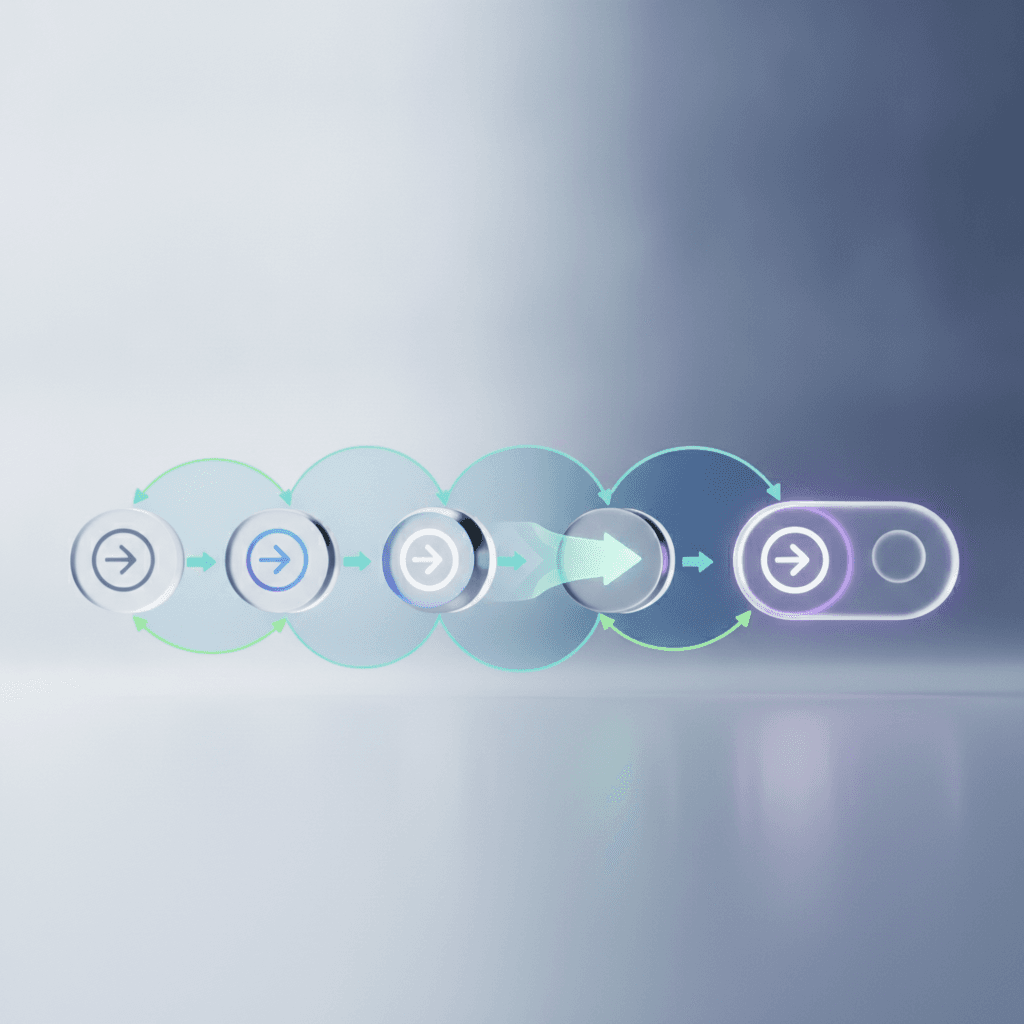
This is where product flows come in. A product flow, visualized as a series of screens or steps, meticulously outlines the sequence of interactions a user undertakes to complete a specific task within the product. It’s a detailed blueprint defining how the user navigates, makes decisions, and encounters system responses. If a journey map tells you where and why, a product flow shows the precise path.
Deconstructing the Journey Map for Flow Development
To effectively translate a journey map into product flows, deconstruct it with an eye for action. Identify specific stages or "moments of truth" where your product directly intervenes. Look closely at pain points and opportunities. For instance, user frustration during "researching options" signals a need for a flow streamlining information discovery or comparison.
Each identified pain point or opportunity becomes a potential starting point for a product flow. Consider a user's journey to book a vacation: "difficulty comparing hotel amenities" demands a flow allowing easy viewing, filtering, and comparison. Focus on specific user goals within these stages – what is the user trying to accomplish? This clarity defines the scope and purpose of each product flow.
Step-by-Step: Crafting Your Product Flow
Once actionable insights are extracted, methodically build out your product flows. This ensures every interaction is intentional and directly addresses a user need or goal. Think of this as translating the user's emotional arc into a precise sequence of product actions and reactions.
- Identify User Goals: Pinpoint the exact task the user needs to accomplish.
- Outline Ideal Path: Map the most direct sequence of steps for goal completion.
- Map System Responses: Document system feedback, error messages, and alternative paths.
- Specify UI/Content: Detail necessary interface components and content.
- Consider Edge Cases: Address what happens if something goes wrong or the user deviates.
- Iterate & Validate: Share flows with stakeholders/users for refinement.
By systematically addressing these points, you transform conceptual understanding into a concrete, executable plan for your product’s user experience, paving the way for intuitive and effective design.
Bringing Flows to Life: Tools and Best Practices
Visualizing product flows is crucial for clear communication. While sophisticated tools exist, clarity is key. Start with pen and paper or digital whiteboarding tools like Miro. For detailed, interactive flows, design tools like Figma with prototyping features are invaluable. Choose a medium allowing easy iteration and clear representation of steps, decisions, and outcomes.
Regardless of the tool, best practices enhance utility. Use clear, concise labels for steps and actions. Employ standard flow chart symbols if they aid understanding, prioritizing simplicity. Ensure each flow focuses on a single user goal. Most importantly, foster collaboration: involve product managers, developers, and other designers early. Their perspectives are vital for identifying constraints and usability issues.
The Ongoing Cycle: From Flow to Feedback to Refinement
A product flow is not static; it’s a living document. Once a feature based on your flow is released, collect feedback and analyze real-world usage data. User testing, A/B testing, analytics, and interviews provide invaluable insights into how well your flows are performing.
Are users completing tasks successfully? These questions validate assumptions and reveal areas for improvement. If feedback indicates friction, revisit your journey map for broader context, then refine the product flow. This cyclical process of mapping, flowing, building, testing, and refining ensures your product adapts to user needs, making it a continuous journey towards better user experiences.
Translating user journey maps into actionable product flows is a fundamental skill for building user-centered products. It’s the practical bridge connecting deep user empathy with concrete execution. By systematically deconstructing journeys, crafting flows, and continuously iterating, you empower your team to move beyond understanding what users need to precisely defining how your product will deliver it, resulting in more intuitive and successful designs.
Sources & Further Reading
- Journey Mapping 101 — Nielsen Norman Group
- User Flows — Interaction Design Foundation
- The UX Design Process — Interaction Design Foundation
- Empathy Mapping — Nielsen Norman Group
- Information architecture — Wikipedia